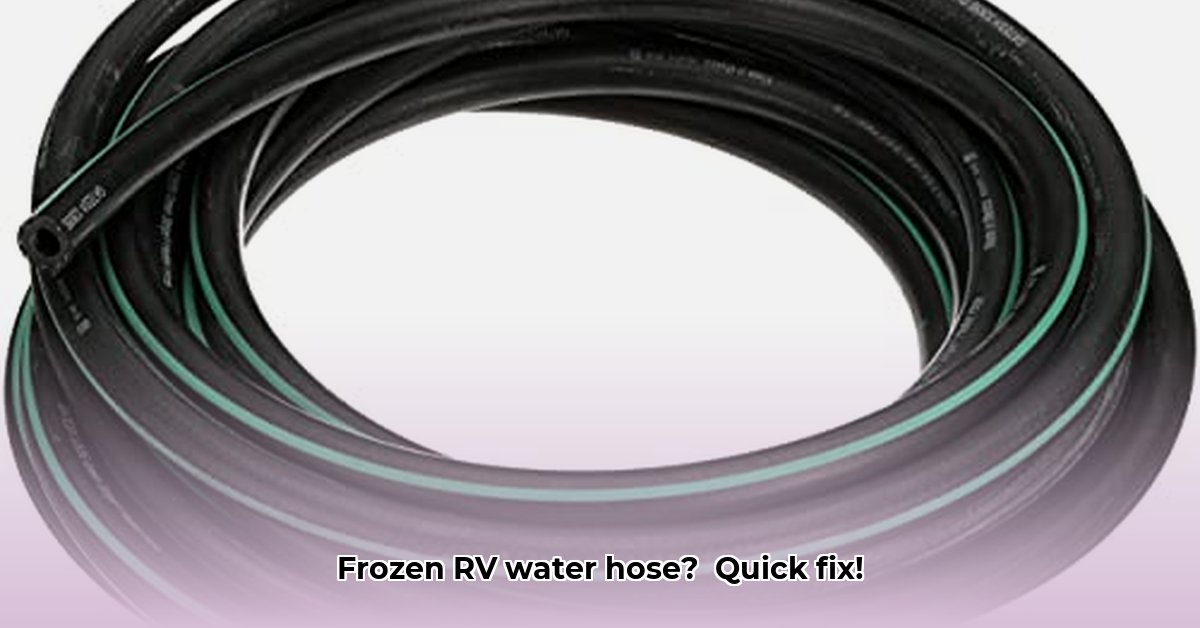
Heated Water Hose Troubleshooting: Identifying the Problem
A frozen RV water hose is a major inconvenience, especially during cold weather. This guide focuses on troubleshooting and repairing Camco heated water hoses, commonly purchased from Tractor Supply and other retailers. We'll cover diagnosing problems, performing repairs (including safe thermostat bypass), and implementing preventative maintenance to keep your water flowing smoothly. For more information on RV sewer hoses, check out this helpful resource: RV sewer hose guide.
Understanding Your Heated Water Hose System
Your Camco heated water hose uses an electric heating element, similar to an electric blanket, to prevent freezing. A thermostat acts as a temperature regulator, turning the heating element on and off to maintain a safe temperature for the water. If the thermostat fails, the heating element may not function, leading to a frozen hose. Do you know how to check your thermostat for malfunctions?
Troubleshooting a Frozen Camco Heated Water Hose
Before starting any repairs, always disconnect the hose from its power source. Electricity and water are a dangerous combination.
Step 1: Visual Inspection
Carefully examine the hose for visible damage, such as frayed wires, melted plastic, or signs of overheating. If you find damage, do not attempt to repair the hose yourself. Contact Camco or a qualified technician.
Step 2: Gather Your Tools
You'll need a multimeter (available at Tractor Supply or other hardware stores) to test the electrical components. A multimeter measures electrical resistance, voltage, and current.
Step 3: Locate the Thermostat
Consult your hose's manual to find the thermostat's location. It's usually a small box or unit attached to the hose.
Step 4: Test the Thermostat with a Multimeter
Set your multimeter to measure ohms (resistance). Gently touch the probes to the thermostat's terminals (small metal contacts).
- Reading near zero ohms: The thermostat is likely functioning correctly.
- Infinite reading ("OL"): The thermostat may be faulty and needs replacement or bypassing (a temporary solution).
What if the Thermostat is Faulty?
If the multimeter indicates a faulty thermostat, you have two options:
- Replace the Thermostat: This is the ideal solution but may require specialized parts. Contact Camco or search online retailers specializing in RV parts.
- Temporary Bypass (Proceed with Extreme Caution): This is a short-term fix and should only be used in emergencies. Bypassing the thermostat eliminates temperature control, potentially leading to overheating or a fire hazard.
How to Bypass a Camco Heated Water Hose Thermostat (Temporary Fix)
Warning: This is a last resort for emergencies only. Improper bypassing can result in overheating, electrical damage, and fire hazards. If you're not comfortable with electrical work, contact a qualified electrician.
- Disconnect Power: Ensure the hose is unplugged from the power source.
- Disconnect Wires: Carefully disconnect the wires from the thermostat. Take photos to document the connections.
- Connect Wires Directly: Connect the wires directly to each other using wire connectors (wire nuts) to ensure a secure, insulated connection.
- Reconnect Power: Reconnect the power and carefully observe the hose's operation.
Long-Term Solutions and Preventative Maintenance
Bypassing the thermostat is not a permanent solution. Consider these long-term options:
- Replace the Thermostat: If the thermostat is faulty, replacing it is the best long-term fix.
- Replace the Hose: If the hose is beyond repair or if multiple components are failing, replacing the entire hose might be necessary. Consider higher-quality hoses for increased durability.
- Preventative Maintenance: Regularly inspect the hose for damage, ensure proper airflow around the hose, and store it properly during periods of non-use. This helps avoid freezing and extend the hose’s lifespan. Winterizing your RV's plumbing system is also crucial to prevent freezing.
Risk Assessment: Understanding Potential Problems
Understanding the potential problems and mitigation strategies are critical. Here's a simple table:
| Component | Likelihood of Failure | Severity of Failure | Mitigation |
|---|---|---|---|
| Thermostat | Moderate | Moderate (Inconvenience) | Regular testing, replacement |
| Heating Element | Low | High (Fire Hazard) | Proper installation, careful operation |
| Hose Material | Low | Moderate (Leakage) | Proper installation, regular inspection |
Remember, safety is paramount. If you're unsure about any of these steps, consult a qualified RV technician or electrician. A functioning heated water hose is essential for comfortable RVing, but safety should always be your top priority.